


The rehabilitation of the damaged five (5) sections of the access road between Well 6 & 9 and Well 12 is a critical civil engineering intervention aimed at restoring safe, reliable, and uninterrupted access to operational well sites. This road serves as a key logistics route for personnel, equipment, and materials, and its rehabilitation is essential to support ongoing and future oil and gas operations while minimizing safety and operational risks.
Condition Assessment and Planning
The rehabilitation process begins with a detailed site inspection and condition assessment to identify the extent and causes of road failure, including erosion, potholes, surface deformation, poor drainage, and subgrade weakness. Surveying and geotechnical evaluations are carried out to define rehabilitation limits, material requirements, and appropriate engineering solutions. A traffic and HSE management plan is developed to ensure safe movement during construction activities.
Site Clearing and Preparation
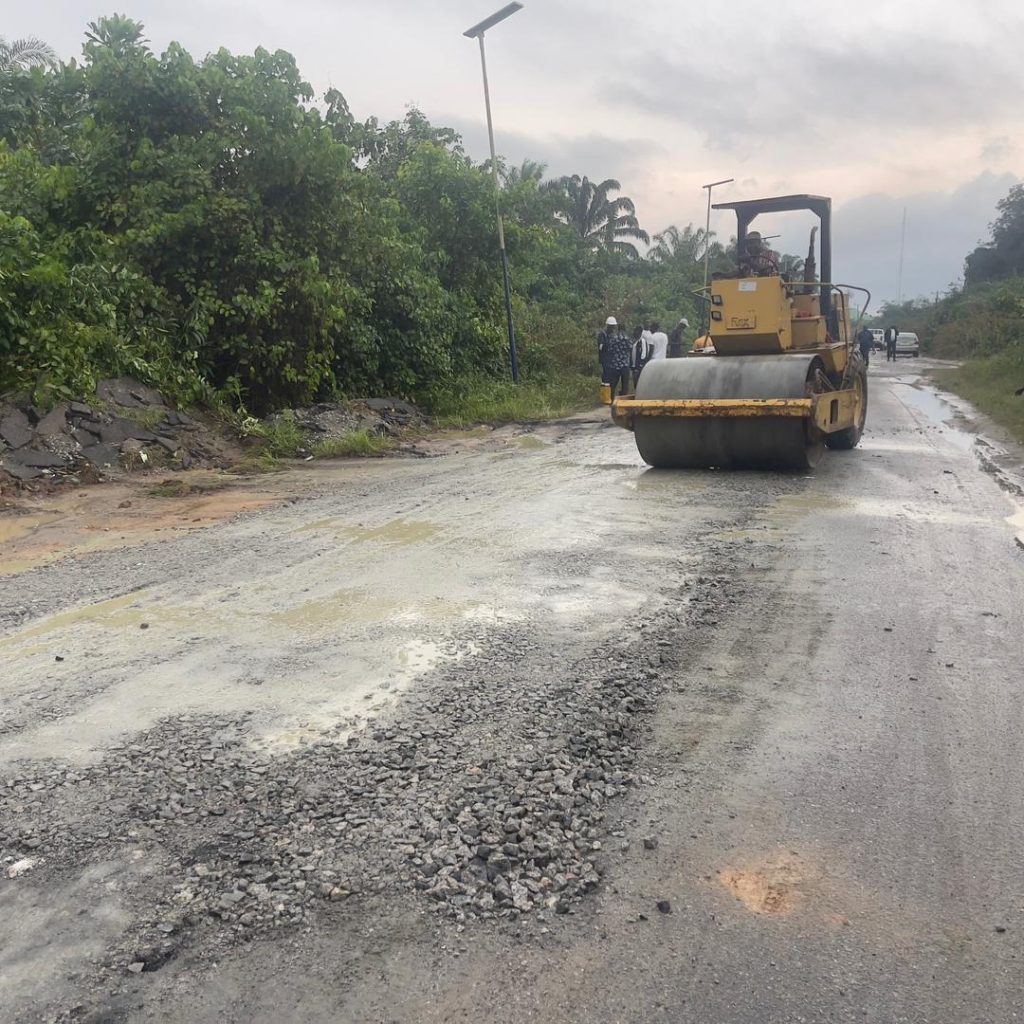
Damaged road sections are cleared of debris, failed pavement materials, and unstable soils. Excavation is carried out to remove weak subgrade layers, and the exposed formation is shaped and compacted to the required level. Temporary diversions or traffic control measures are put in place to maintain safe access to the well locations during rehabilitation works.
Subgrade Improvement and Pavement Works
Subgrade strengthening is achieved through compaction and, where necessary, replacement with suitable lateritic or approved fill materials. A well-compacted sub-base and base course are constructed using graded aggregates to provide adequate load-bearing capacity. The road surface is rehabilitated through resurfacing with laterite, gravel, or asphalt concrete, depending on design specifications and operational requirements, ensuring a smooth and durable driving surface.
Drainage and Erosion Control
Proper drainage systems, including side drains, culverts, and cross-drainage structures, are constructed or rehabilitated to effectively manage surface runoff and prevent future erosion and pavement failure. Erosion control measures such as slope stabilization, grassing, and protective lining are implemented where required.
Quality Control, Safety, and Completion
All works are executed in accordance with approved engineering designs, quality standards, and HSE procedures. Continuous quality checks, compaction tests, and visual inspections are conducted to ensure durability and performance. Upon completion, the rehabilitated road sections provide improved access, enhanced safety, reduced vehicle maintenance costs, and reliable connectivity between Well 6 & 9 and Well 12, supporting efficient and safe field operations.

Leave A Comment