Our construction of six (6) cellar rig mats and foundations at the UTA Replacement location in OML, Akwa Ibom State, was a major civil and structural engineering project executed to support safe and efficient drilling operations. The scope was designed to provide stable, load-bearing platforms capable of withstanding the heavy static and dynamic loads imposed by drilling rigs, auxiliary equipment, and operational traffic, while ensuring compliance with oil and gas engineering standards and HSE requirements.
Site Preparation and Surveying
The project commenced with detailed site surveys, setting out, and verification of coordinates in line with approved engineering drawings. The site was cleared of vegetation, debris, and unsuitable materials, followed by grading and leveling to achieve the required formation levels. Access routes were prepared to allow safe movement of construction equipment and materials.
Excavation and Cellar Construction
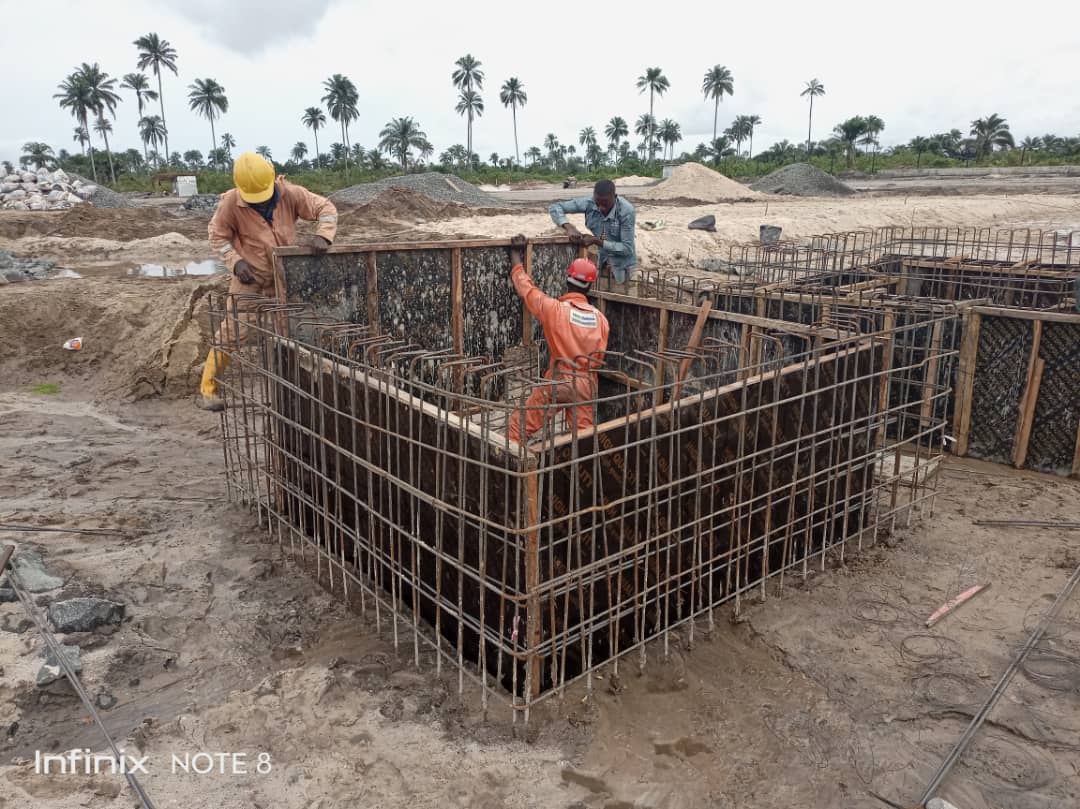
Excavation works were carried out for the six cellar pits to the specified dimensions and depths, accommodating wellhead assemblies, BOP installations, and drainage requirements. Excavated areas were inspected to confirm soil competence, and corrective measures such as over-excavation and replacement with suitable fill were applied where weak subsoil conditions were encountered. Blinding concrete was placed to provide a clean and stable base for subsequent works.
Subgrade Improvement and Foundation Works
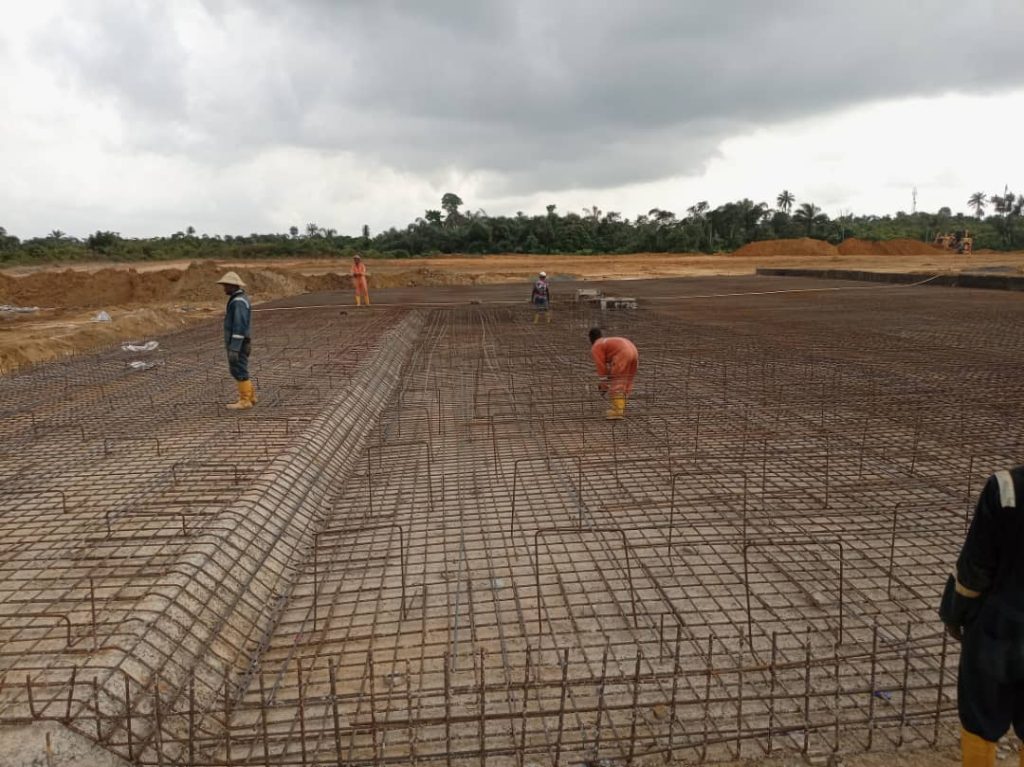
The subgrade beneath each rig mat and cellar foundation was properly compacted to achieve the required bearing capacity. Selected lateritic fill or approved granular materials were placed and compacted in layers to improve soil strength and stability. Reinforcement steel was fabricated and installed in accordance with structural designs, ensuring proper cover, spacing, and anchorage.
Formwork, Anchor Bolts, and Embedded Items
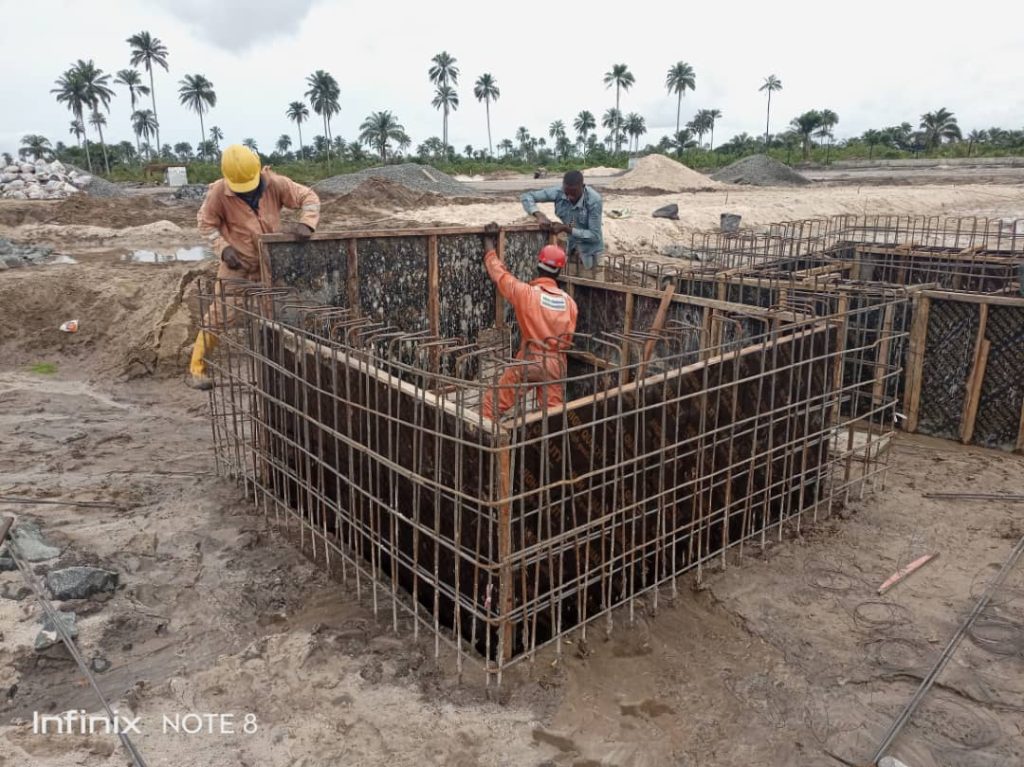
Robust formwork systems were installed to achieve accurate dimensions and structural integrity during concrete placement. Anchor bolts, templates, sleeves, and other embedded items required for rig alignment and equipment installation were precisely positioned and securely fixed to ensure correct orientation and elevation.
Concrete Placement and Finishing
Concrete of the specified grade was batched, transported, and poured for the cellar walls, base slabs, and rig mat foundations under strict quality control. Slump tests, cube sampling, and visual inspections were conducted to ensure compliance with specifications. Mechanical vibrators were used to achieve proper compaction, eliminate voids, and enhance durability. Finishing works ensured smooth, level surfaces suitable for rig installation.
Curing, Backfilling, and Compaction
Following concrete placement, curing was carried out using approved methods to achieve the required strength and prevent early-age cracking. After formwork removal and strength confirmation, backfilling around the cellar structures was done in layers with suitable materials, compacted to the specified density. The surrounding area was reinstated and graded to promote effective drainage and erosion control.
Quality Assurance, HSE, and Completion
All construction activities were executed in strict compliance with approved method statements, project specifications, and HSE policies applicable to operations within an active oilfield environment. Continuous supervision, inspections, and documentation ensured adherence to quality and safety standards.
Upon completion, the six cellar rig mats and foundations provided robust, durable, and reliable structural platforms that ensured safe drilling operations at the UTA Replacement location in OML, Akwa Ibom State, contributing significantly to operational efficiency and long-term field development objectives.



Leave A Comment